
Local Delivery
starting at $79
starting at $79
starting at $79
starting at $79
 A sectional sofa promises the dream of generous, flexible seating that anchors your living room and invites everyone to get comfortable. In practice, though, choosing one that actually works in your space is trickier than scrolling through beautifully staged showroom photos might suggest.
The challenge is real: sectionals are large furniture pieces that can transform a room or overwhelm it entirely. Whether you’re working with a compact small apartment or an expansive open floor plan, getting the fit wrong means daily frustration, blocked walkways, cramped corners, or a piece that simply dominates everything else in the room. Statistics suggest that around 15 percent of sectional purchases end in returns due to delivery complications alone, often because buyers underestimated how the furniture would actually fit through their doorways or within their living space.
This guide focuses on practical fit: dimensions, function, traffic flow, and long-term comfort rather than just aesthetics. By the end, you’ll know how to avoid the most common mistakes, buying too big, selecting the wrong shape, or poor placement, and end up with a sectional that works day to day, not just in photos.
It’s tempting to start by browsing styles and fabrics, but that approach almost guarantees disappointment. Before you click “add to cart” on anything, grab a tape measure and get the real numbers on your room’s dimensions. This unglamorous step is the foundation of every successful sectional purchase.
Start by measuring the full room footprint, length, and width, wall-to-wall. Note any alcoves, bay windows, angled walls, or architectural quirks that could limit where a sectional can actually go. Don’t just measure the obvious open floor; measure around radiators, built-in shelving, fireplaces, low window sills, floor vents, and any columns or half-walls that might interfere with placement.
For clearances, aim for at least 76 to 91 cm (30 to 36 inches) of open space in main walkways. Between your sectional and a coffee table, you’ll want roughly 45 to 46 cm (about 18 inches) so people can move past without awkward shuffling. These numbers aren’t arbitrary; they’re what keep a room feeling functional rather than like an obstacle course.
Here’s where things get practical: use painter’s tape or large pieces of cardboard to outline the prospective sectional’s footprint directly on your floor. Include the chaise depth and any corner pieces. Live with this outline for a few days. Walk around it. Sit in imaginary positions. You’ll quickly discover whether that 95-inch L-shape leaves room to breathe or makes your morning coffee route feel like a squeeze.
Finally, and this is where many buyers get burned, measure your doorways, stairwells, elevators, and any tight hallway turns. Older homes often have doors as narrow as 71 to 76 cm (28 to 30 inches), and apartment corridors can be surprisingly restrictive. The longest piece of your sectional may need to rotate diagonally to fit through, so grab those diagonal measurements too. Many modular sectionals break down into individual pieces precisely to solve this problem, but you need to confirm dimensions before the delivery day becomes a disaster.

Function should come before form. The activities you actually do in your living room, not the ones you imagine in an idealized future, should determine the size and shape of your sectional.
Take a few minutes to list your primary uses: watching TV, reading, kids’ play, hosting game nights, accommodating overnight guests, and working from home. Now rank them by importance. A room primarily used for movie marathons has different seating needs than one where you frequently entertain guests for dinner parties.
Different priorities lead to different choices:
Lounging and TV watching: Deeper seats (around 96 to 107 cm / 38 to 42 inches) and a chaise lounge section let you stretch out comfortably
Conversation and mixed-use rooms: Shallower, firmer seats (76 to 86 cm / 30 to 34 inches) encourage upright posture and face-to-face interaction
Frequent entertaining: Consider pairing a sectional with accent chairs so guests can sit facing each other rather than in a straight line along the sofa
Be honest with yourself here. If you frequently entertain guests, a massive U-shape that forces everyone to stare in the same direction might work against your goals. A more compact L-shaped sectional paired with a couple of armchairs often creates better conversation zones.
Consider functional add-ons based on your specific seating needs. Sleeper mechanisms (typically 183 to 244 cm / 72 to 96 inches with substantial depth) serve occasional overnight guests without a dedicated guest room. Storage compartments built into chaise sections hide blankets, toys, and remote controls. Reclining modules suit dedicated home-cinema setups where comfort during long viewing sessions is paramount.
Two quick scenarios to illustrate:
A family of four in a 20-square-meter living room primarily uses it for kids’ homework, casual TV time, and weekend movie nights. Their best bet is likely a mid-sized L-shaped sectional with a chaise for lounging, positioned to face the TV while leaving clear pathways for active children.
A couple in a compact city apartment uses their living room for remote work during the day and relaxed reading at night, with occasional friends visiting for drinks. A smaller chaise sectional with firmer cushions, something around 213 to 244 cm (7 to 8 feet) total length, keeps the space feeling open while serving multiple functions throughout the day.
The sectional’s shape must work with your room’s architecture, doors, windows, the TV wall, and fireplace placement, rather than fighting against it. Getting this right prevents the daily annoyance of a sofa that blocks a window you need to open or cuts off the natural path to your balcony.
Common shapes include L-shaped, U-shaped (U shape), chaise sectionals, curved, and modular configurations. Each suits different room types and lifestyles.
Understanding orientation matters too. “Left-facing” and “right-facing” refer to the direction the longer section extends when you’re standing facing the sofa. Sketch your room and label which direction feels natural based on where doors and focal points (TV, fireplace, large window) actually sit. Getting this wrong is a surprisingly common mistake that leaves people with a sectional that faces the wrong way entirely.
L-shaped sectional configurations are the most versatile option for standard rectangular rooms, particularly those in the 3.0 to 4.5 meter (10 to 15 foot) width range. They tuck neatly into corners while providing ample seating for three to five people.
In open-plan spaces, an L-shape can define a seating zone effectively. wrapping around a rug, facing a TV or fireplace, and creating a sense of distinct areas within a larger room. This works especially well when the sectional floats slightly away from the wall rather than being pushed flush against it, which can make even medium-sized rooms feel boxed in.
Most L-shapes range from 241 to 305 cm (95 to 120 inches) in overall width, making them suitable for the majority of living rooms without overwhelming the space.
U-shaped sectionals suit larger spaces, think rooms at least 4.5 by 5.5 meters (roughly 15 by 18 feet), where multiple people gather to watch TV, play games, or socialize together. They create a cozy, enclosed feeling that’s ideal for dedicated movie nights.
The trade-off is flexibility. A U-shape can limit how the room functions if it also serves as a thoroughfare between the kitchen and dining areas, for example. When choosing this configuration, leave a clear entry point into the “U” and maintain generous walking clearance (at least 76 cm / 30 inches) behind at least one side.
These configurations typically start at 305 cm (120 inches) and can extend to 381 cm (150 inches) or more, so they genuinely require substantial square footage to avoid feeling cramped.
Sectionals with a single chaise lounge section are excellent choices for smaller living rooms or city apartments where one person often stretches out to read or nap while others sit upright.
For spaces where a full L or U would overwhelm the room, look for chaise sectionals around 213 to 244 cm (7 to 8 feet) long with a chaise extension of 137 to 168 cm (4.5 to 5.5 feet). These dimensions provide lounging comfort without consuming the entire room.
Think carefully about which side the chaise should be on. Consider door placement, window locations, and TV viewing angles. You want the chaise oriented so the person lounging can see the screen comfortably and isn’t blocking a major pathway.

Modular sectionals function as “building blocks” that let you start with a smaller setup and expand later. They’re ideal for renters who might move to different apartments, growing families, or anyone whose changing needs make flexibility valuable. The individual pieces connect via brackets, Velcro, or magnetic connectors, allowing reconfiguration without tools.
These systems adapt well to tricky layouts, long, narrow living rooms, or spaces with multiple openings, because you can arrange pieces to suit unusual footprints. The trade-off is typically cost: modular configurations often run 20 to 50 percent higher than fixed sectionals due to their versatile engineering.
Curved sectionals make bold design statements but demand specific conditions. They work best with a clear focal point like a fireplace or panoramic window and require generous space around them. In tight, rectangular rooms, curved pieces feel awkward and limit your layout options. They’re also harder to pair with standard rectangular rugs and tables, so consider your other furniture pieces before committing.
A section changes how people move through and interact in a room, for better or worse. Getting traffic flow right means the difference between a space that feels inviting and one that frustrates everyone who lives there.
Start by identifying natural routes: paths to doors, balconies, hallways, and key features like the TV or a large window. Your sectional should not chop these paths in half or force people into awkward detours.
Practical walkway guidelines:
Maintain at least 76 to 91 cm (30 to 36 inches) of open space in main traffic routes
Avoid forcing people to squeeze behind a chaise or cut directly in front of the TV during viewing
Keep 45 cm (18 inches) minimum between sectional edges and side tables or the coffee table for easy access and easy movement
Creating effective conversation zones often means pairing the sectional with one or two accent chairs positioned to face the main seating. This arrangement lets guests interact naturally rather than sitting in a long row where talking requires twisting around.
Anchor your seating area with a rug large enough that at least the front legs of the sectional and any chairs rest on it. This visually defines the zone and prevents the arrangement from feeling disjointed. The rug should extend under the coffee table as well.
In open-plan homes, floating the sectional away from the wall can help divide the living area from dining or kitchen zones while maintaining open sight lines. This approach works particularly well when the back of the sectional faces the kitchen, just ensure the upholstery looks presentable from behind.
A large sectional carries significant visual weight. Without a counterbalance, the room can feel lopsided or entirely dominated by one piece of furniture.
Counterbalance strategies include placing a substantial media console, large artwork, or tall bookcase on the opposite side of the room. This creates equilibrium rather than a room where everything seems to lean toward the sofa.
Match furniture scale appropriately. A generous sectional demands a generously sized coffee table and rug. Undersized tables make the sofa look even more massive by comparison, throwing off the room’s proportions.
Use lighting at different heights around the sectional, floor lamps beside the chaise, table lamps on side tables, to distribute visual interest and prevent the space from feeling “sofa heavy.”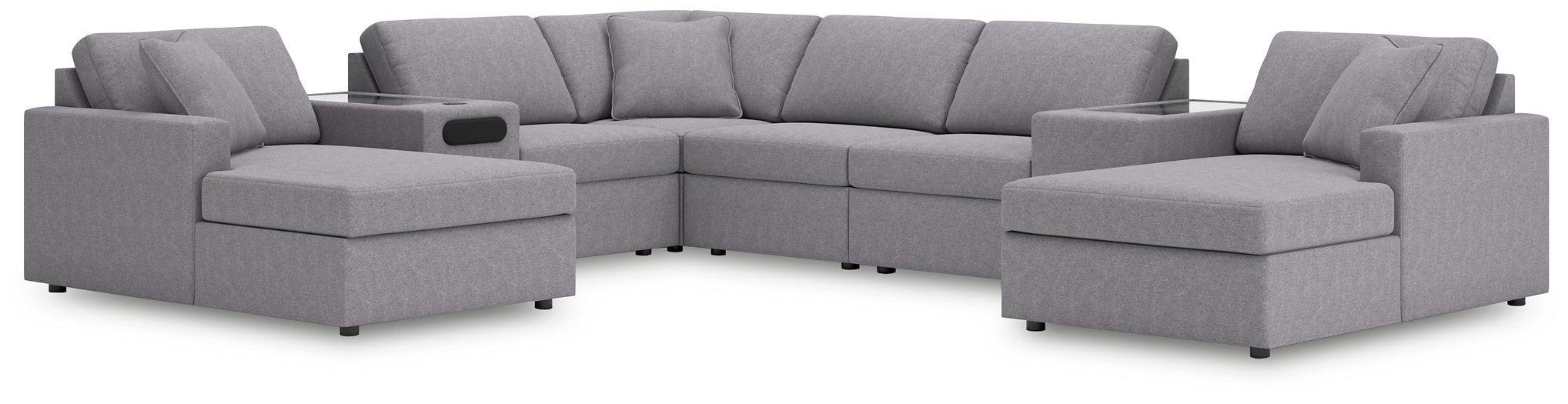
A sectional can technically “fit” your room, but still feel wrong if the seat depth, height, and cushion feel don’t match the people using it. This is where the difference between a sectional you tolerate and one you love becomes clear.
Seat depth typically ranges from 51 to 61 cm (20 to 24 inches). Standard depths around 51 cm suit shorter individuals or those who prefer sitting upright with feet flat on the floor. Deeper seats (56 to 61 cm) accommodate taller users and dedicated lounging, but can leave shorter people with their feet dangling or their backs unsupported.
Seat height generally falls between 43 and 48 cm (17 to 19 inches). Lower modern styles look sleek but may challenge older adults or anyone with mobility concerns who finds deep, low seating difficult to exit gracefully.
Cushion construction affects daily comfort and longevity:
|
Cushion Type |
Comfort Profile |
Durability |
Best For |
|---|---|---|---|
|
High-density foam cores |
Firm, supportive |
Excellent |
Everyday heavy use |
|
Foam wrapped in fiber |
Medium-soft, plush initial feel |
Good |
Balanced comfort |
|
Down-blend |
Soft, sink-in feel |
Requires regular fluffing |
Occasional lounging |
|
Coil/spring suspension |
Responsive, resilient |
Excellent |
Long-term investment pieces |
Check the back cushion height relative to your shoulders and head. For extended TV sessions or reading, you want back support that reaches high enough to rest your head comfortably without craning your neck.
Before purchasing, sit and lie on display models in multiple positions, the corner, the chaise, and the center seats. Quality can vary across a single sectional, and you want consistent comfort throughout.
Fabric choice should be driven by lifestyle realities, not just how something looks in a showroom. Consider pets, children, allergies, and how much daily use the room actually sees.
Common upholstery options:
Tightly woven synthetics (polyester, nylon blends): Durable, affordable, easy to clean
Performance fabrics with stain resistance treatments: Ideal for households with kids and pets; spills wipe away before absorbing
Leather and faux leather: Long-lasting, develops patina, but can feel cold or hot depending on the climate
Textured weaves: Good at hiding everyday wear and crumbs; less formal appearance
Velvet and similar pile fabrics: Luxurious appearance, but shows marks and require more maintenance
For long-term pieces in smaller rooms, neutral colors offer maximum flexibility. Add personality through cushions, throws, and decor items that are easy to swap when you want a refresh.
Color practicalities matter: darker fabrics show lint and pet hair while very light fabrics reveal every spill. Mid-tones typically suit busy households best.
Before purchasing, ask about removable cushion covers, cleaning codes (W, S, WS, X), and warranty terms. Understanding ongoing care requirements prevents unpleasant surprises when that first glass of wine tips over.

Before placing an order, run through this checklist of pitfalls that trip up even careful shoppers.
Buying the biggest sectional that fits on paper. Just because dimensions technically work doesn’t mean the room will feel comfortable. A sectional should occupy no more than 50 to 60 percent of your seating area. Leave breathing room so the space doesn’t feel cramped the moment someone adds a recliner or ottoman down the road.
Pushing every sectional tight against the walls. This seems logical for maximizing floor space, but often backfires. Medium-sized rooms frequently feel smaller and less inviting with furniture jammed against every wall. Floating the sectional even 15 to 30 cm (6 to 12 inches) away can create a more balanced, spacious feel.
Ignoring door swings, window access, and heating vents. These details seem minor until you live with them daily. A chaise blocking a window you need to open for ventilation, or a sectional arm positioned over a floor vent (which can increase HVAC strain by around 10 percent), creates ongoing frustration.
Letting the sectional overpower the focal points. A massive sectional that dwarfs a fireplace, blocks architectural details, or competes with large windows undermines the room’s overall design aesthetic. The sectional should complement your home’s aesthetic, not dominate it.
Skipping the final tape test. Do one last outline on the floor and physically walk through typical daily routes, morning coffee, letting the dog out, and greeting guests at the door. Identify any spots where the proposed placement forces awkward navigation. This simple step catches problems that measurements alone miss.
Finding the perfect sectional comes down to following several factors in sequence: measure carefully with real numbers, define how the room actually functions day to day, select a shape that works with your floor plan rather than against it, plan for traffic flow and conversation, and fine-tune comfort details and materials based on who will use it and how.
Treat this purchase as a long-term investment. A quality sectional should serve you well for a decade or more, adapting to your changing needs through thoughtful initial selection rather than replacement every few years. Take the time to map, test, and visualize before committing. The painter’s tape on your floor costs nothing but can save you significant hassle and expense.
Prioritize how the sectional feels and functions over fleeting trends. The right choice will make your living space more welcoming and practical for years to come. A sectional that truly fits isn’t just about dimensions; it’s about how the piece supports your life, creates a cohesive look with your existing decor, and makes everyone who uses it feel comfortably at home.
With these steps complete, you’re ready to shop with confidence. Draw up your floor plan, define your must-haves, and find the perfect fit for your space and spirit. Your ideal sectional is out there; now you know exactly how to recognize it.

A sectional sofa is the perfect choice for comfort, flexibility, and everyday living. At House of Furniture, our sectional sofa collection offers spacious seating options designed to fit your room layout and lifestyle. Each sectional is selected for comfort, durability, and style, making it easy to create a welcoming living space.
Explore our sectional sofa selection today and find the right fit for your home. Whether you’re furnishing a family room or upgrading your living area, House of Furniture offers sectionals that bring comfort and functionality together.
Delivery
Check what it costs to get this order to your door.